
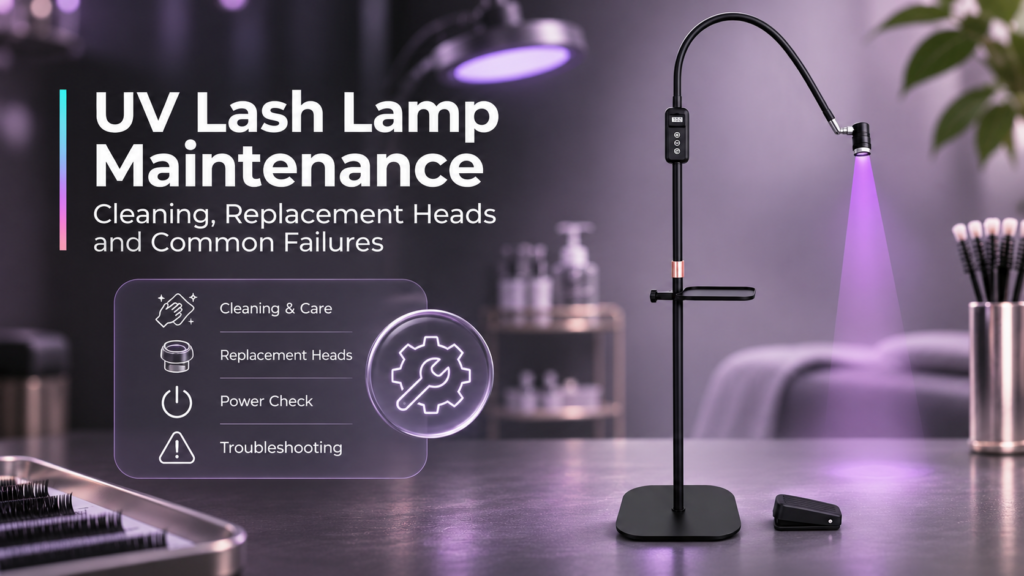
A UV lash lamp can look fine until a dirty light head, unstable cable, or sudden failure disrupts appointments. That means delayed services, uncertain curing, and avoidable replacement costs. In this guide, I’ll explain how to clean, inspect, and troubleshoot your lamp safely in busy salons.
Maintain a UV lash lamp by disconnecting power before cleaning, following the manufacturer’s approved cleaning method, and regularly checking the head, cables, connectors, and controls. Keep a maintenance log. Replace a lamp head only when the device supports replacement and the part is verified compatible. If the lamp fails, flickers, or cures inconsistently, stop using it and contact the supplier. Never look into an operating UV light source or attempt unauthorized electrical repairs.
Below, I’ve organized the practical checks into simple questions, from UV lash lamp cleaning to replacement decisions and wholesale quality control and sourcing advice.
How Do You Clean a UV Lash Lamp Safely?
Before cleaning, check the device manual: the lens, cover, body, and connector may require different treatment. I never assume salon disinfectants are safe for optical or electrical components.
Step-by-Step UV Lash Lamp Cleaning Instructions
- Turn the lamp off, disconnect its power supply, and let it cool.
- Remove loose dust from accessible surfaces using a clean, soft, dry, lint-free cloth.
- Clean the housing or optical cover only with the product and method approved for that model. Apply cleaner to the cloth, never spray it into the lamp.
- Inspect visible cable insulation, power connectors, mounting joints, and switches without opening the housing.
Do not immerse the device, scrape the lens, or use alcohol, acetone, abrasive pads, or high-pressure air unless the manufacturer explicitly permits them. Keep moisture away from ports. If adhesive residue will not come off with an approved method, ask the supplier rather than forcing it. Let approved surfaces dry before reconnecting power. Refer to the manufacturer cleaning guide.
How Often Should You Clean a UV Lash Lamp?
An effective UV lash lamp maintenance schedule depends on appointment volume, workplace conditions, and each model’s instructions. I suggest checking exposed surfaces before use and cleaning at the interval your supplier specifies; never publish a universal “daily disinfectant wipe” rule without checking material compatibility.
When the lamp is shared between stations, follow the salon’s infection-control process while protecting the lamp’s electrical components. Record the date, model, cleaning method, and any unusual behavior. Busy stations may require closer monitoring. A recurring problem in your log often reveals more than a single inspection.
What Should a UV Lash Lamp Maintenance Checklist Include?
Use a UV lash lamp maintenance checklist that anyone on the team can follow. I focus on five areas: whether the housing and accessible optical surface are clean; whether cables and plugs are intact; whether the head and stand are secure; whether controls operate normally; and whether reported performance matches the approved operating procedure.
Record the model, serial or batch identifier if available, cleaning date, observed issue, and action taken. A lamp with exposed wires, a damaged power supply, or unexpected overheating should be removed from service, not marked “passed.” For wholesalers, consistent records can support supplier discussions and warranty review.
How Long Does a UV Lash Lamp Last?
UV lash lamp lifespan is not the same as the rated life of its LED light source. A light-emitting component may still turn on while its output changes; power supplies, switches, cables, and mechanical joints may wear sooner. Heat, duty cycle, transport damage, and cleaning practices also affect real service life.
I would ask a manufacturer for the specific model’s rated hours, operating conditions, expected output stability, and warranty terms. Ask how those hours were measured. Do not treat a generic “50,000-hour LED” claim as proof that every complete UV eyelash extension lamp will last that long. See LED lifespan testing guidance.
Can You Replace the Head of a UV Lash Lamp?
Some lamps use a removable head; others have an integrated light assembly. A UV lash lamp replacement head is not automatically interchangeable just because it fits a similar-looking arm. Before purchasing, I check the exact model or SKU, connector configuration, operating voltage and current, controller requirements, mounting design, and manufacturer-specified optical characteristics. A replacement with the wrong output may create curing or exposure risks.
How to Choose a Compatible UV Lash Lamp Replacement Head
Ask whether head replacement is a user-permitted procedure or requires authorized service. Disconnect power and follow exact replacement instructions. Never splice wires, defeat interlocks, or modify a head to fit. Distributors should confirm spare-part lead times and compatibility documentation before promising aftermarket support. Keep part identifiers on purchase orders and service records.
Censreal verification required: which models have replaceable heads, approved SKUs, and installation procedures.
Why Is My UV Lash Lamp Not Turning On?
A UV lash lamp not working may have a straightforward external cause, but it can also signal a defect. I start with checks allowed in the manual: verify the outlet using a different safe device, confirm the power adapter is the specified type, and make sure accessible plugs are properly seated with power disconnected. Check whether the switch, timer, or foot control is set as directed. Never substitute a similar-looking adapter.
Common UV Lash Lamp Failures and Troubleshooting
If it remains off, don’t open the housing or bypass a control to “test” it. A damaged cord, unusual smell, exposed wiring, or repeated tripping means immediate removal from service. Photograph the label and note the symptom, purchase details, and steps already taken before contacting technical support. This makes UV lash lamp troubleshooting faster and prevents unnecessary component swaps.
Why Is My UV Lash Lamp Flickering or Dimming?
If a UV lash light is flickering, dimming, or switching off unexpectedly, stop the treatment and switch off the device. Possible causes include an unstable power source, a loose connection, a failing adapter or driver, or deterioration of the light source. These are possibilities, not a diagnosis.
I would check only accessible connectors approved for user inspection and verify the correct power supply. Document when the flicker happens. Do not judge UV output by looking into the beam: UV may be invisible and can harm eyes or skin. If the fault returns, request a qualified assessment. Treat a flickering lamp as unfit for curing until the issue is resolved.
Why Is My UV Lash Glue Not Curing Properly?
UV lash glue curing problems are not always caused by a broken lamp. The adhesive may need a defined wavelength range and irradiance, while lamp distance, angle, exposure pattern, and the age or storage of the adhesive can affect performance. I would compare the adhesive technical data sheet with the lamp’s verified output specifications before blaming the head.
How Does UV Lamp Compatibility Affect Lash Adhesive Curing?
Never increase exposure time or bring the light closer as an improvised fix. That can raise unnecessary UV exposure without proving effective curing. Use only an adhesive and equipment combination supported by their manufacturers, with eye and skin protection appropriate to the process and applicable training.
Follow the adhesive maker’s approved method for checking curing results. If output testing is needed, ask for a calibrated, wavelength-appropriate measurement performed by qualified personnel. Link the adhesive technical data sheet and UV exposure safety guidance before publication.
When Should You Repair or Replace a UV Lash Lamp?
UV lash lamp repair makes sense only when a qualified technician can restore safe operation with approved parts. I weigh the failure type, age, service history, replacement cost, downtime, warranty terms, and access to legitimate spare parts. An external accessory may be replaceable; a faulty driver or damaged electrical enclosure may require professional service or complete replacement.
If a supplier recommends replacing the device, request the reason in writing and confirm how the old unit should be handled under applicable electrical-waste rules. Also check whether repairs affect warranty coverage. For wholesale buyers, a clear return-and-repair process matters as much as the initial purchase price. Never resell a defective unit as operational.
What Should Wholesalers Check Before Buying UV Lash Lamps and Replacement Heads?
For UV lash lamp wholesale orders, I recommend treating maintainability as part of quality inspection—not as an afterthought. Ask suppliers for model-specific specifications, consistent product identifiers, an inspection plan, traceability where available, and a clear description of replacement components. Confirm packaging strength, incoming inspection options, spare-part ordering terms, and practical after-sales response times.
Quality Inspection, Documentation, and After-Sales Support
Request documents relevant to your market, such as applicable electrical safety and electromagnetic compatibility evidence; never assume ISO 9001 means a particular UV eyelash extension lamp meets every destination country’s product rules. Ask how the supplier handles warranty claims, shipment damage, and batch-level defects. For Amazon sellers or private-label brands, check labeling, user instructions, and traceability before listing.
For multi-country sales, assess each destination’s requirements separately. I also encourage testing sample units with the intended adhesive system under a documented, safe process. Confirm which UV hazards and protective measures the manufacturer discloses. See market-specific compliance guidance.
How Can OEM/ODM UV Lash Lamp Manufacturing Support Wholesale Buyers?
An OEM ODM UV lash lamp project should start with written requirements: electrical ratings, intended use, optical performance, materials, labeling, packaging, and after-sales expectations. Censreal is a China-based beauty-lighting manufacturer with five production lines and OEM/ODM capabilities. The company reports ISO 9001 certification; buyers should request the current certificate and scope during due diligence.
Our goal is to help distributors and brand owners discuss product specifications before they commit to volume orders. Censreal verification required: available UV lash lamp models, approved spare heads, warranty coverage, test reports, and customization options. Contact us through Censreal for current details.
Final Thoughts: How Can You Keep Your UV Lash Lamp Working Reliably?
Routine cleaning and careful inspection can reduce avoidable UV lash lamp failures. My advice is simple: follow model-specific guidance, use compatible replacement parts, and stop using suspect equipment until assessed. What maintenance issues are your customers reporting? Share them with our wholesale team before shipment.
