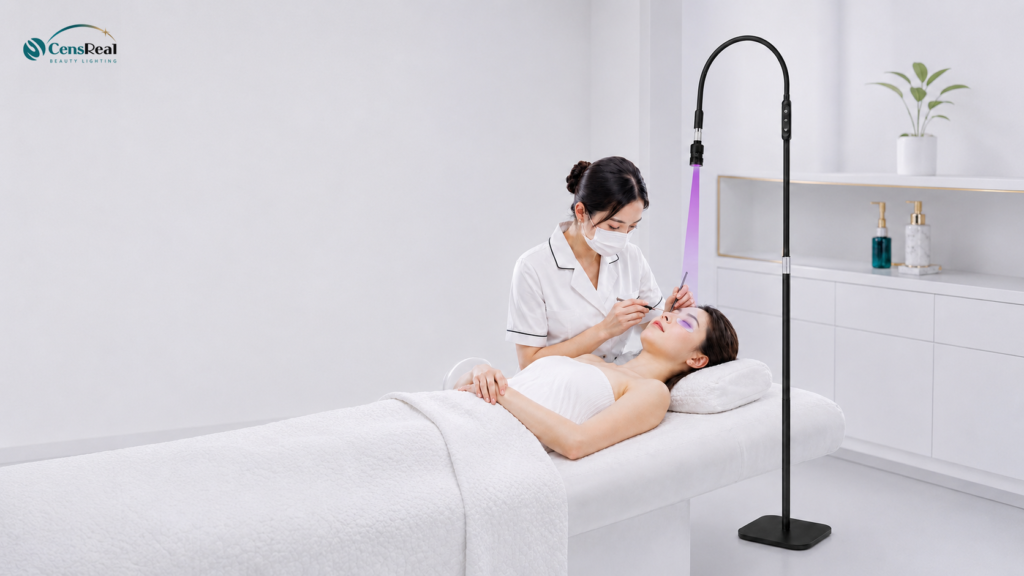
Many lash artists are curious about UV lash systems, but they also worry about eye safety, skin exposure, and long-term use. That concern is valid. The good news is that with proper technique, Eye protection, and controlled UV exposure, UV curing can be used professionally and efficiently.
UV light for lash extensions can be safe when used correctly with professional UV lash lamps, proper lamp distance, limited exposure time, and suitable Eye protection. The main Safety concern is unnecessary UV exposure to the eyes or skin. Lash artists should use certified equipment, follow manufacturer instructions, avoid overexposure, and protect both the technician and client during every treatment.
Before choosing a UV lash system, it helps to understand what the light actually does, where the risks come from, and how it affects retention.
Are UV lash extensions safe for professional salon use?
UV lash extensions are becoming more popular because they offer fast curing and more control during application. Instead of waiting for traditional lash adhesive to dry through air, moisture, and room conditions, UV lash glue cures when exposed to a compatible UV or LED UV lash lamp.
For professional salon use, the key question is not only “Is UV safe?” but “Is the UV system being used correctly?”
A professional UV lash system should be used with short exposure time, proper lamp positioning, compatible adhesive, and clear protection steps. Lash artists should never treat UV light as ordinary salon lighting. It is a curing tool, and it should be aimed only where curing is needed.
When used responsibly, UV lash technology can support a cleaner workflow, faster bonding, and more predictable results. But Safety depends on training, technique, and equipment quality.
Can UV light hurt the eyes or skin?
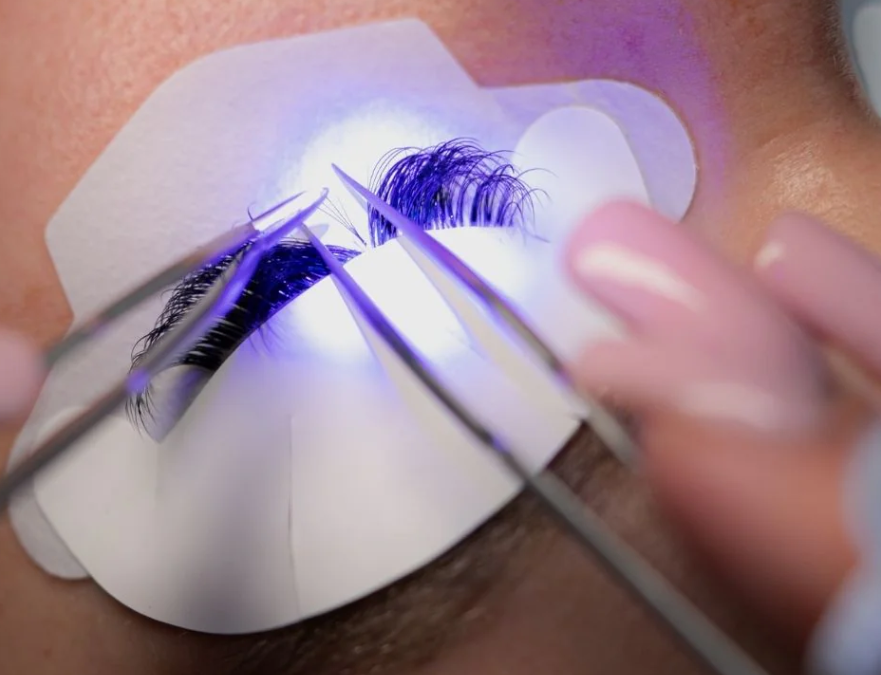
Yes, unnecessary UV exposure can be harmful, However, the impact is minimal; the UV exposure from a single eyelash treatment is equivalent to just a few minutes of exposure to midday sunlight.
The eye area is delicate. Even though the client’s eyes are closed during lash application, lash artists should still avoid shining UV light directly at the eyelids or eye area longer than necessary. The goal is to cure the adhesive bond, not expose the surrounding skin.
Skin exposure is also something to control. A few seconds of targeted curing is very different from long, repeated, careless exposure. For daily salon work, lash artists should think about cumulative exposure. Small habits matter: correct angle, correct distance, short cure time, and protective accessories.
A helpful rule is simple: use the least amount of UV exposure needed to fully cure the adhesive.
Do lash artists and clients need Eye protection?
Yes, Eye protection is highly recommended when using UV lash systems.
For lash artists, UV-blocking glasses or goggles can help reduce repeated exposure during daily work. This is especially important because technicians may perform several appointments per day. Even if each curing step is short, the artist’s total exposure over time can add up.
For clients, protection can include eye pads, tape, shields, or other accessories recommended by the lamp or adhesive manufacturer. The client should keep their eyes fully closed during treatment, and the lamp should be positioned carefully so the light is directed toward the adhesive area only.
Eye protection should not be treated as optional decoration. It is part of professional salon Safety. Just as lash artists use proper isolation, sanitation, and adhesive control, they should also build UV protection into their service routine.
Is long-term use of UV lash lamps risky?
Long-term risk depends on how the lamp is used.
A trained lash artist using a professional UV lash lamp for short, controlled curing is very different from someone using an uncertified lamp with no protection and no technique. The main concern is not one single flash of light. The concern is repeated UV exposure without protection, especially for technicians who work every day.
To reduce long-term risk, lash artists should:
Use UV-blocking Eye protection during services.
Keep the lamp at the recommended distance.
Avoid pointing the light toward the eyes or exposed skin.
Use short curing times instead of unnecessary repeated exposure.
Choose professional equipment designed for lash application.
Replace or maintain equipment according to the manufacturer’s guidance.
Salon owners should also create clear safety standards for their team. If multiple technicians use UV systems, everyone should follow the same protocol. This protects clients, artists, and the salon’s professional reputation.
How efficient is UV curing for eyelash extensions?
Curing efficiency is one of the biggest reasons lash artists are interested in UV lash systems.
Traditional lash glue depends heavily on the salon environment. Humidity, temperature, adhesive amount, and drying speed all affect the final bond. If the room is too dry, too humid, too cold, or too warm, the adhesive may behave differently.
UV lash adhesive works differently. It is designed to cure when exposed to the correct UV wavelength and light intensity. This can give lash artists more control because curing is triggered by the lamp, not only by the room environment.
That means UV curing may help reduce waiting time, improve workflow speed, and make results more consistent. For busy salons, this can be a practical advantage. Faster curing can also help reduce stickies and movement after placement when the technique is correct.
However, efficiency still depends on the full system: the adhesive, lamp power, wavelength, distance, angle, and the artist’s hand speed.
Can UV lash glue really cure in 1–2 seconds?
Many UV lash glues are designed to cure in 1–2 seconds, but the real answer is: yes, it can happen under the right conditions.
A 1–2 second cure is possible when the adhesive and UV lash lamp are compatible, the lamp output is strong enough, the distance is correct, and the glue amount is controlled. If the lamp is too far away, the angle is wrong, or too much adhesive is used, curing may take longer or become less consistent.
This is why lash artists should not judge performance by the glue alone. The lamp matters just as much.
For example, Half Moon Light offers several UV lash lamp options that are designed for professional eyelash extension work, including UV glue curing lamps, a 2-in-1 UV Lash Light with Ring Light System, a White LED UV Lash Lamp with Wheel Base, and a Mini UV LED Tweezer Light. These types of tools are created to help lash artists position the light more accurately and support faster curing during application.
Still, even with a fast-curing lamp, artists should test the system before using it on clients. Always check the adhesive instructions and confirm the correct curing distance and exposure time.
UV lash extensions vs regular lash extensions: which bond is more stable?
UV lash extensions and regular lash extensions can both create strong results when used correctly. The difference is how the adhesive cures.
Traditional lash glue usually relies on moisture in the air to cure. That makes it sensitive to humidity, temperature, and room changes. Skilled lash artists can manage this well, but it still requires constant environmental control.
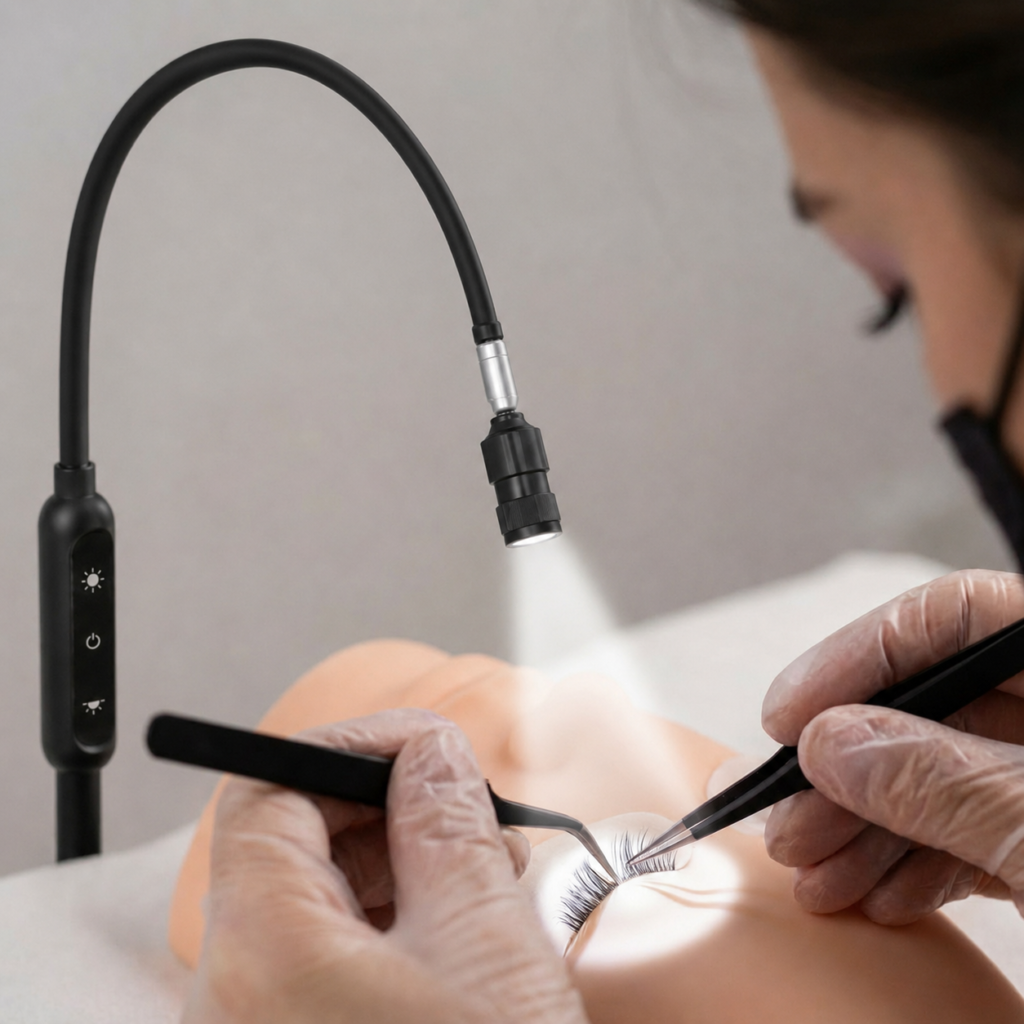
UV lash glue is cured by UV light. This can create a more controlled bonding process because the artist decides when to cure the adhesive. In many salon situations, this may lead to better consistency and fewer problems caused by changing room humidity.
That does not mean UV glue is automatically stronger in every case. Stability still depends on lash prep, natural lash health, isolation, adhesive amount, placement, and aftercare. But compared with traditional glue, UV adhesive can give artists more control over the curing moment.
For salon owners, this control can be valuable. It may help reduce service variability between different rooms, seasons, and working conditions.
Will UV lash glue improve lash retention?
UV lash glue may help improve retention consistency, but it is not magic.
Retention depends on many factors: clean natural lashes, proper isolation, correct extension weight, adhesive control, client aftercare, sleeping habits, skin oil, makeup use, and the natural lash growth cycle. No adhesive system can overcome poor prep or incorrect application.
That said, UV curing can support retention because the adhesive is cured quickly and intentionally. Once the lash extension is placed correctly, the artist can cure the bond almost immediately. This may reduce shifting, slow drying, and humidity-related issues.
Clients who struggle with traditional lash retention because of oily skin, sweat, or changing environments may notice more stable results with a well-applied UV lash system. But lash artists should communicate honestly: UV technology can support better retention, but professional technique is still the foundation.
What are the pros and cons of UV lash extensions?
UV lash extensions have clear advantages, especially for professional artists who want faster curing and better control.
The main benefits include quick curing, less dependence on room humidity, more predictable bonding, reduced waiting time, and potentially better retention consistency. These benefits can make a big difference in busy salons where time and reliability matter.
The possible drawbacks are also important. UV lash systems require proper Safety habits, Eye protection, compatible UV adhesive, and training. Not every lamp or glue performs the same way. A low-quality lamp, incorrect wavelength, or poor positioning can affect both safety and curing efficiency.
That is why choosing the best UV lash system is not only about speed. Lash artists should look for stable design, adjustable positioning, proper curing performance, and clear usage guidance.
What makes the best UV lash system for salons?
For salon use, the best UV lash system should be practical, stable, and easy to control.
A floor-standing UV lash lamp with a wheel base can be useful for salons because it is stable and easy to position around the treatment bed. A 2-in-1 UV lash light with ring light can be helpful when artists want curing support and working illumination in one setup. A mini UV LED tweezer light may suit artists who prefer a compact tool for targeted curing.
When comparing products, lash artists should consider lamp power, working distance, adjustability, curing time, beam direction, and comfort during long appointments. They should also check whether the lamp is designed specifically for lash adhesive curing, not just general UV use.
Half Moon Light’s UV lash lamp product range gives salon owners different options depending on their workspace, service style, and curing preference. The goal is not to choose the strongest light possible. The goal is to choose a professional tool that supports fast curing while helping control UV exposure.
Final thoughts: Is UV lash technology worth it?
UV lash systems can be a practical upgrade for trained lash artists and salon owners. They offer faster curing, more predictable bonding, and less dependence on humidity compared with traditional lash glue. But they must be used with respect for Safety.
The most important habits are simple: use proper Eye protection, control UV exposure, follow product instructions, and choose professional lash equipment. When these steps are in place, UV curing can help artists work more efficiently without ignoring client and technician safety.
UV lash systems are not just about speed. For lash artists, the real value is controlled curing, stable workflow, and better consistency. With the right lamp, correct technique, and proper Eye protection, UV technology can be a practical upgrade for professional salons.
